Attestation Signing Is Now Available: Bind Your SBOM to the Artifact
2026-11-26
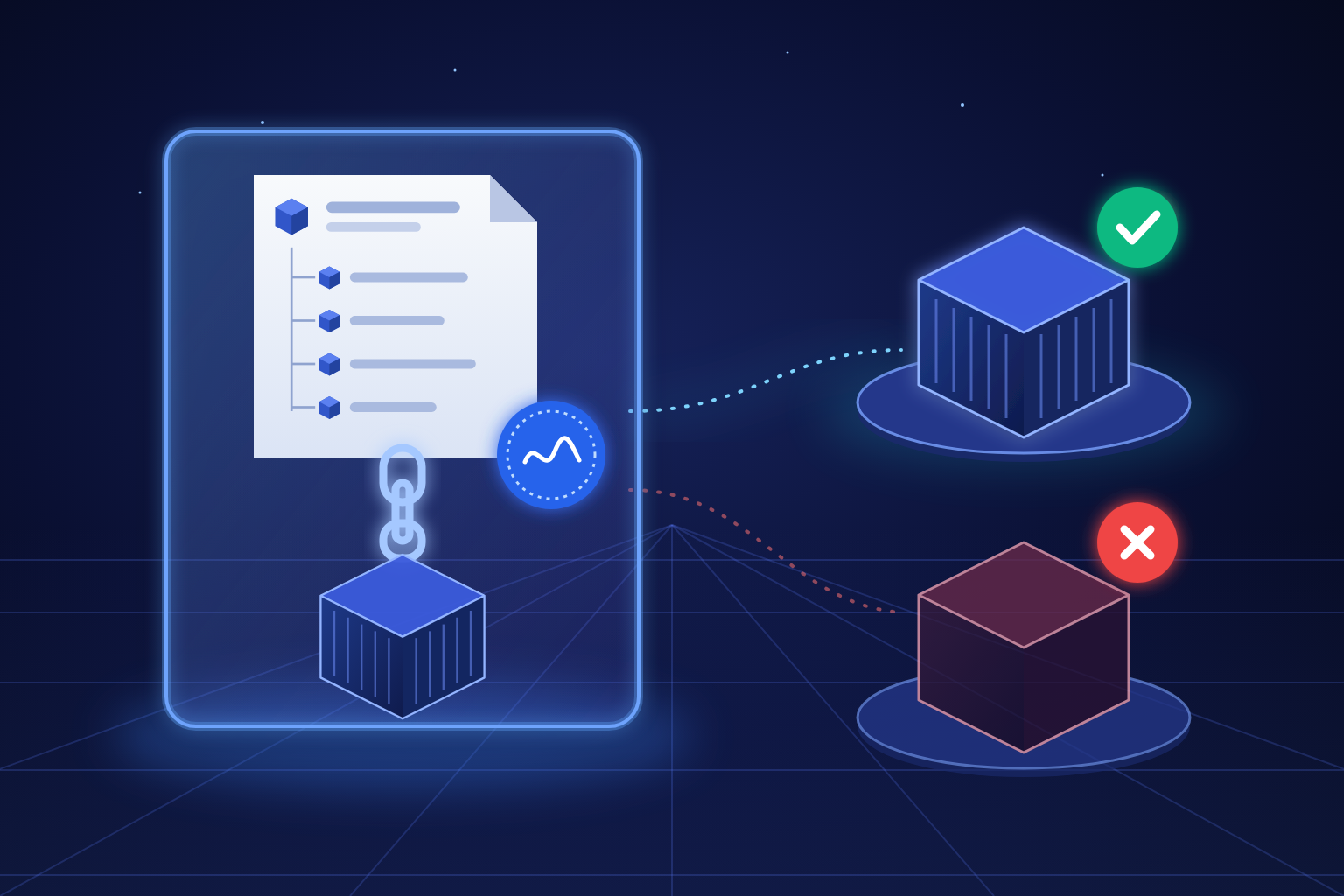
In Introducing Attestation Signing, we described the gap between two questions. A signed SBOM answers the first:
Is this the SBOM the signer approved?
An artifact-bound attestation answers the second:
Is this the SBOM the signer approved for this exact artifact?
Attestation signing is now available in SecureSBOM. You can sign an SBOM together with the digest of the artifact it describes, publish that signed claim beside the artifact, and verify both the signature and the subject before you trust it.
The fastest way to understand it is to break it.
Try It Now, in Your Browser
The SBOM attestation guide includes a live verification panel that runs the same checks as the SecureSBOM API, in the same order, with the same error codes. It runs entirely in your browser. Nothing is uploaded.
Start with a real attestation signed by SecureSBOM. It verifies. Then change something:
- Change a component version in the SBOM. The signature no longer matches.
- Point the statement at a different artifact. The signature no longer matches.
- Re-format the payload. The signed content is no longer in its canonical form.
- Corrupt the signature. It fails.
- Use someone else’s public key. It fails.
- Check a different artifact. The signature is still valid, but the subject does not match, so verification fails.
That last case is the one SBOM-only signing cannot catch. A valid signature for the wrong artifact must fail verification, and here it does.
You can also edit the decoded statement directly and watch each check respond. Every check is reported, so you can see exactly which layer broke and why.
What Shipped
The attestation APIs sit alongside the existing v2 SBOM operations:
POST /api/v2/attestations/sign
POST /api/v2/attestations/verify
The design follows the contract described in the original post:
- An immutable subject digest is required. A signing request identifies the artifact by its SHA-256 digest. Container tags and filenames are not treated as security identities.
- It uses a standard statement. The SBOM is placed in an in-toto Statement, which is signed inside a DSSE envelope. There is no proprietary wrapper.
- SBOM handling stays data-aware. CycloneDX, SPDX, and AI-BOM predicates are validated before signing, and the complete statement is canonicalized with RFC 8785 before it is signed.
- Verification requires the expected subject. The caller must supply the digest of the artifact being evaluated. A missing or mismatched subject fails closed with a distinct result.
- Attestation keys are separate. Attestations are signed with a dedicated attestation key. A standard SBOM signing key cannot sign an attestation, and an attestation key cannot sign a plain SBOM.
- Existing signatures are unchanged.
/api/v2/signand/api/v2/verifycontinue to sign and verify standalone SBOMs.
By default, the attestation carries a single signature. The SBOM is placed in the statement exactly as it was sent, and the attestation signature covers every byte of it. Teams that also need the SBOM to verify on its own after it is extracted can request an embedded or detached SBOM signature as well.
Verification Communicates the Full Decision
The original post argued that attestation verification is more than a signature check. The verify response reports each check separately:
- whether the signature is valid for the expected key;
- whether the signed content is in its canonical form;
- whether the subject digest matches the artifact being evaluated; and
- whether an optional SBOM-level signature, if present, is valid.
The result is verified: true only when every required check passes. A failure returns a distinct code such as
signature_invalid, key_mismatch, or subject_mismatch, so a pipeline can tell a tampered attestation apart from an
attestation for a different release.
The attestation guide walks through every field of the sign and verify requests and responses in plain language, with checklists for producers and consumers and a table of every error code.
Getting Started
Attestation keys are created through the SecureSBOM API:
curl -X POST "$SECURESBOM_API_URL/api/v1/keys" \
  -H "X-API-Key: $SECURESBOM_API_KEY" \
  -H "Content-Type: application/json" \
  -d '{"key_type": "attestation"}'
Sign the SBOM together with the digest of the artifact it describes:
{
  "key_id": "<attestation key id>",
  "subject": [
    { "name": "registry.example.com/app", "digest": { "sha256": "<artifact digest>" } }
  ],
  "sbom": { "bomFormat": "CycloneDX", "specVersion": "1.6", "...": "..." }
}
Publish the returned attestation beside the artifact. Consumers then verify it against the digest of the artifact they have:
{
  "key_id": "<producer's attestation key id>",
  "attestation": { "...": "the attestation, unchanged" },
  "expected_digest": { "sha256": "<digest you computed>" }
}
Never copy the expected digest out of the attestation. The check only proves something when the consumer computes it from the artifact they are about to use.
The Durable Design
The goal was never simply to attach an SBOM to an image. It is:
Identify the artifact by digest, place that identity and the SBOM in one signed claim, verify both the signature and the subject, then use the registry or repository to make the claim discoverable.
That design is now available in SecureSBOM. See it fail in your browser, then contact us to add attestation signing to your release pipeline.